Polyphosphate Content in Sediments of Stratified Lakes and Activated Sludge of Wastewater Treatment Plants Is Controlled by Iron-Mediated Phosphorus Availability
L. Schröder; P. Schmieder; M. Hupfer;
ACS ES&T Water 5, 4188-4196 (2025)
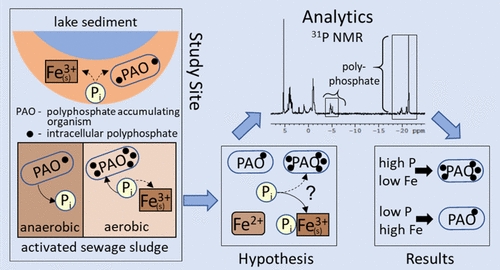
Biogenic polyphosphate storage contributes to the fixation of phosphorus at the surface of aquatic sediments and is the essential process for the proper functioning of wastewater treatment plants (WWTPs) with an enhanced biological phosphorus removal setup. We hypothesized that, in lake sediments and activated sludge of WWTPs, the close coupling of the iron and phosphorus cycles influences phosphorus availability for polyphosphate formation. We compiled a data set based on 31P nuclear magnetic resonance spectroscopy investigations for the determination of biogenic phosphorus compounds in activated sludge from 16 WWTPs and 34 sediments from stratified lakes and conducted (nonlinear) regressions of polyphosphate as a function of element contents and biogenic or total phosphorus pools. In lake sediments and activated sludge, biogenic phosphorus had a positive effect and iron had a negative one on the polyphosphate content. However, approximately three times more polyphosphate was formed per milligram of biogenic phosphorus in activated sludge than in lake sediments. The relative importance of the biogenic polyphosphate pool in the phosphorus cycle at the sediment- water interface increases in iron-poor lakes. Furthermore, in WWTPs, polyphosphate yields (polyphosphate: biogenic phosphorus) decrease for molar phosphorus-to-iron ratios <1.6, indicating a negative effect of extensive iron dosing on polyphosphate formation.
